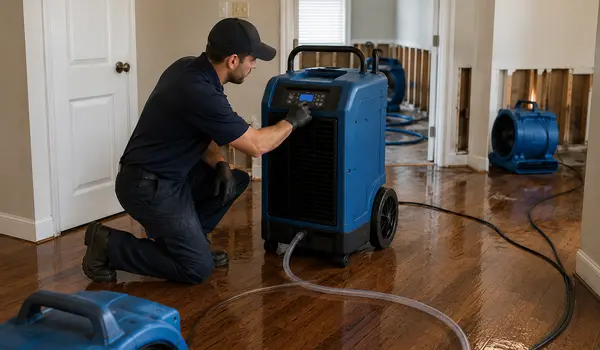
Hardwood Floor Water Repair becomes more limited after water sits beneath boards. In the first day or two, NT Water Damage Austin may be able to dry and reset affected planks; after that, warped flooring can cup or buckle as the underside retains moisture. Staining may darken along seams, and damp underlayment can create musty smells even after the surface feels dry. A small, contained spill that never reached the subfloor can sometimes wait until normal business hours. Learn more about our nt water damage near Austin.
Waiting does not make absorbed water evaporate evenly. The board face may look unchanged while moisture migrates into the tongue-and-groove joints and subfloor, where it can loosen adhesive or support visible mould. Bubbling paint on a nearby baseboard is also a useful clue that water travelled beyond the floor. If the source is stopped and a moisture meter shows normal readings, cosmetic touch-ups can wait; active dampness should not.
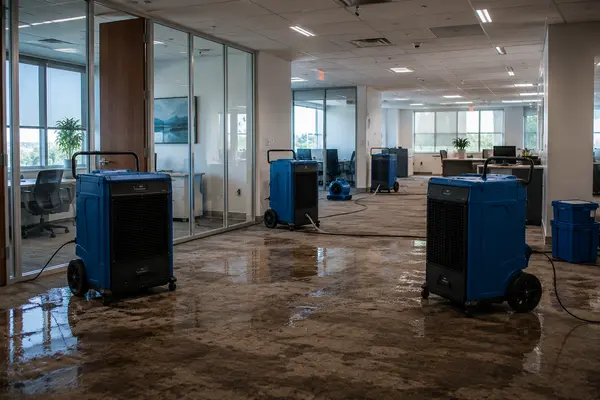
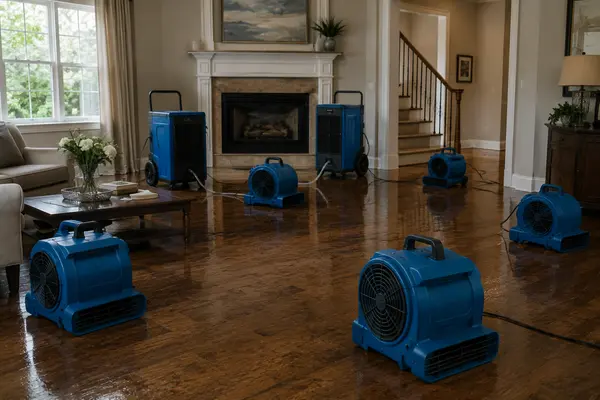
First, the technician identifies the source, checks the hardwood edges, baseboards, and adjacent rooms, then takes moisture-meter readings across the floor and subfloor. That moisture mapping shows where water actually travelled instead of treating only the darkest boards. Standing water is removed through water extraction, and containment may be set around the affected room to keep dust and disturbed spores from moving into a hallway, kitchen, or HVAC return. Contact Us for a free, no-obligation quote.
Next, air movers and dehumidifiers are positioned to dry the wood at a controlled rate; excessive heat or airflow can worsen cupping. HEPA filtration is used where debris or suspected mould needs to be managed, followed by antimicrobial treatment on appropriate affected surfaces and sanitising of salvageable materials. Readings are monitored over several days until the moisture trend supports removal of equipment. Use the contact options to arrange an inspection and discuss the wet area.
The outcome depends on the layer that is wet, not merely the size of the puddle. Water on a sealed oak surface may dry without replacement, while water that entered through plank seams can saturate plywood, adhesive, and insulation below. Previous towel drying, fans, or a shop vacuum may help the surface but can leave elevated readings beneath it. Water Extraction early can preserve more boards and reduce staining.
Inspection can uncover a slow refrigerator-line leak, loose toilet seal, or wet wall plate that was not obvious at first. Those findings change the sequence: stopping the source comes before refinishing, and a lifted section may need access to dry the subfloor. Controlled drying commonly takes about 3 to 7 days, while sanding, matching stain, or replacing boards can extend the calendar. Saving original flooring may cost more time than replacing a small, badly warped patch.
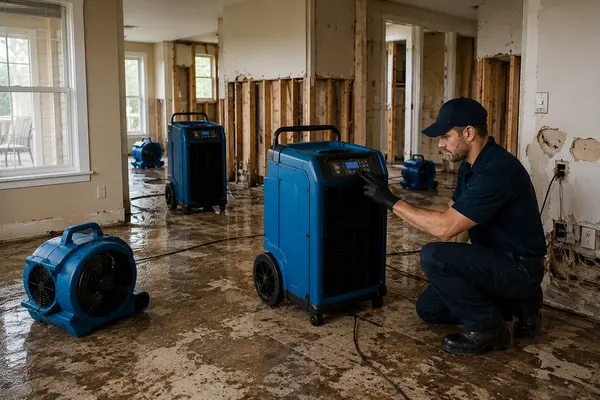
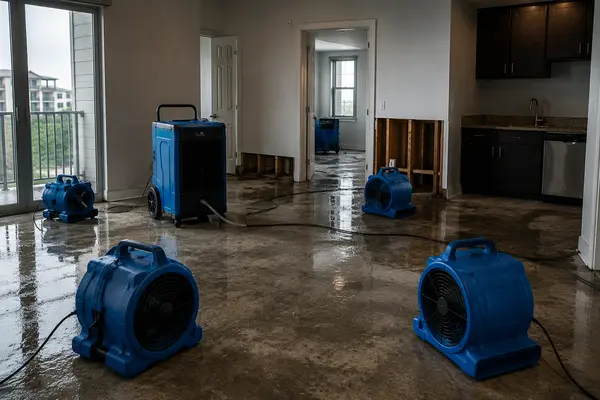
Cost moves first with the affected square footage and the depth of moisture. Drying a single exposed room with accessible plank edges is often a fraction of a project involving several rooms, a wet subfloor, and baseboard removal; the overall scope can reasonably run 2 to 5 times larger. Dense hardwood, engineered planks, underlayment, trim, and matching finish also matter because each material dries, lifts, or replaces differently.
Access changes labor as much as floor area: furniture moving, a second-story room, built-in cabinets, and limited electrical circuits can add setup and monitoring time. A written estimate should separate inspection and moisture mapping, extraction and drying equipment, containment or HEPA filtration, antimicrobial treatment, demolition, repairs, and any sanding or finish work. It should also state the assumed drying timeframe, such as 3 to 7 days, and identify work that may be added if concealed moisture appears.
NT WATER DAMAGE AUSTIN
9430 Research Blvd, Austin, TX 78759
(512) 900-6973
Hours of Operation
Open 24 Hours