
An appliance leak leaves a practical choice: stop the supply and handle visible water yourself, call a plumber for the failed hose or valve, or arrange drying work through NT Water Damage Austin after the source is controlled. Towels and a wet vacuum cost less upfront and cause the least disruption, but they do not show moisture behind a baseboard or beneath vinyl. A moisture meter and air movers add equipment and room access, yet reveal and address what the surface cannot. You can also find out more about the company.
Another distinction is between restoring the wet area and replacing it. A dishwasher supply-line drip may leave cabinet toe-kicks, drywall, and engineered wood apparently intact; drying them can keep a kitchen usable, though fans may run for 2 to 4 days. If swollen particleboard or delaminated flooring is removed, disruption increases and a repair follows, but trapped water and odor-causing residue are no longer left inside those materials.
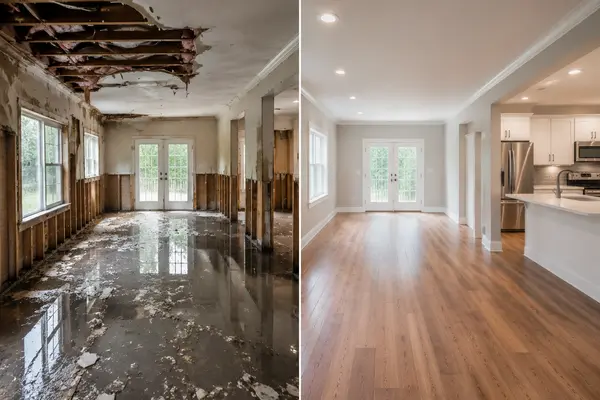
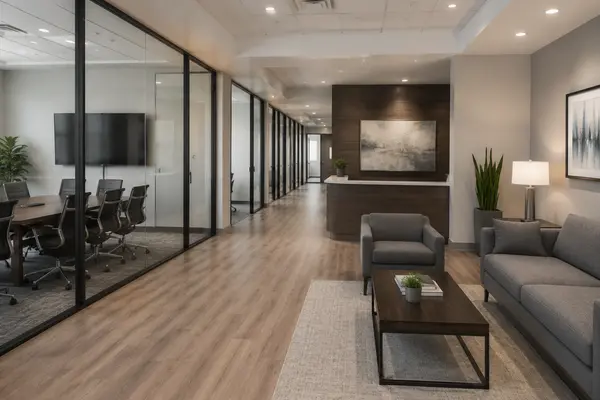
At the visit, the leak source is first isolated, such as a cracked ice-maker line, washer hose, drain pan, or water-heater valve, so new water does not defeat the drying plan. Technicians document affected rooms, extract standing water from carpet or under appliances, and use moisture meters to map damp drywall, subfloor, and cabinet bases. For water heater leak cleanup, this mapping distinguishes a small utility-room spill from moisture that has traveled under flooring.
Controlled drying follows the moisture map. Air movers circulate air across wet surfaces while dehumidifiers remove that moisture from the room air, preventing the equipment from merely moving humidity around. Containment may separate a kitchen or laundry area from occupied rooms, and HEPA filtration can capture dust released during removal. Where the water or materials require it, antimicrobial treatment and sanitising address residue. Readings are monitored until affected materials reach appropriate dry levels.
A leak that ran for 20 minutes can be very different from a slow refrigerator line drip discovered after a weekend away. Clean water on sealed tile may need extraction and drying only, while water that entered MDF cabinets, carpet pad, insulation, or a floating floor can remain hidden after the surface looks dry. Prior towel drying, a shop vacuum, or running household fans may reduce standing water, but moisture mapping determines what remains in the wall cavity or subfloor. Learn more about our expert Air Conditioner Leak Cleanup services.
Air conditioner leak cleanup can change quickly if a clogged condensate drain has overflowed repeatedly instead of spilling once from a damaged pan. Condensate may travel through ceiling drywall, insulation, and light-fixture openings before it appears as a stain below. A contained laundry-room dry-out may take a few days; removing wet ceiling sections, drying a cavity, and coordinating repairs can extend the disruption. Access behind built-in appliances and under cabinets also affects the work scope.
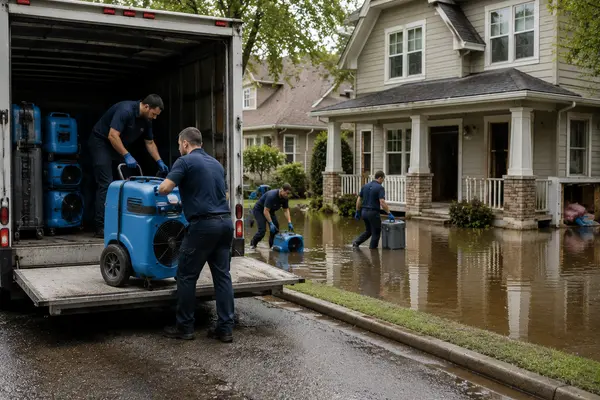
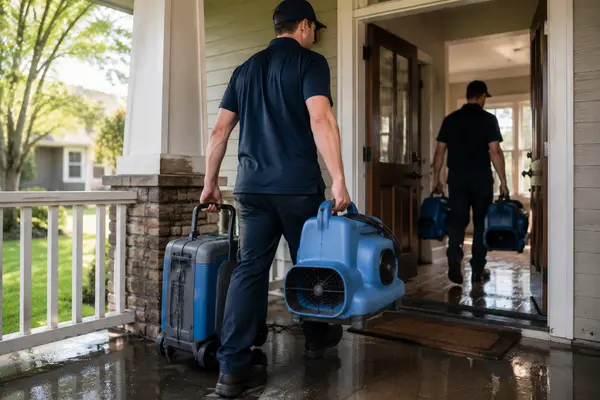
Cost ranges begin with the footprint: a small, clean-water spill limited to a laundry closet is often a fraction, perhaps one-third to one-half, of a job involving a kitchen, adjacent flooring, and wet drywall. Easy access around a washer or refrigerator reduces labor compared with disconnecting appliances, removing toe-kicks, or opening a ceiling cavity. The need for several dehumidifiers, extended monitoring, containment, or removal of swollen particleboard moves the total upward.
A written estimate should separate water extraction, moisture inspection, air movers and dehumidifiers, monitoring visits, containment, sanitising, demolition, and any antimicrobial treatment. It should also identify the affected materials, such as carpet pad, drywall, cabinet bases, or laminate planks, and explain what is included if moisture readings remain elevated after the first drying period. Comparing those line items helps distinguish a limited one-room dry-out from a larger project with removal and repair work.
NT WATER DAMAGE AUSTIN
9430 Research Blvd, Austin, TX 78759
(512) 900-6973
Hours of Operation
Open 24 Hours