
A brown ring spreading across the ceiling, bubbling paint near a light fixture, or water dripping onto wet carpet can make a normal room feel unsafe quickly. NT Water Damage Austin can help identify whether the source is a roof opening, plumbing line, upstairs bathroom, or HVAC drain. Move furniture away, catch active drips, and switch off electricity to the affected circuit if water is near a fixture; do not puncture a sagging ceiling.
If the stain is dry, unchanged, and its cause has been repaired, it may wait a short time for inspection, though the drywall should still be checked. It cannot wait if the spot grows, the ceiling sags, a musty smell appears, or visible mould is present. Warped flooring below or a damp insulation cavity means water has traveled beyond the surface, where wood framing and drywall paper can remain wet.
Ceiling repairs begin with what remains in place: textured drywall, plaster, recessed cans, insulation, or a previous patch. A ceiling that was painted over after a slow toilet leak may need moisture-meter readings and a small exploratory opening, not just stain-blocking primer. Mold Remediation may be needed if damp drywall paper or insulation has supported growth; removing a limited section can preserve sound framing, while leaving wet material risks a larger reopening later.
Prior attempts change the plan too. Fans can dry a room’s air, but they do not dry a closed ceiling cavity unless openings and airflow are correctly placed. A thermal camera, pin meter, and inspection behind a light fixture can reveal a second leak path or soaked cellulose insulation. Repair can be limited to a patch if readings fall to dry levels; ongoing plumbing repairs, roof work, or structural drying extend the schedule.
The price range reflects how much ceiling must be opened and rebuilt, not the stain’s diameter alone. A localized 1-to-4-square-foot drywall patch with drying may be a relatively small job, while a 20-to-100-square-foot area involving insulation, texture matching, and several rooms can run several times higher. High ceilings, stairwells, and tight attic access add labor because containment, ladders, and drying equipment take longer to install and monitor. Learn more about our expert Appliance Leak Cleanup services.
Materials also move the total: standard drywall and smooth paint are simpler to replace than plaster, popcorn texture, wood paneling, or recessed lighting components. Appliance Leak Cleanup can remain limited if the supply hose was shut off quickly, but hidden subfloor or ceiling-cavity moisture may expand the scope after testing. A written estimate should itemize inspection, containment, demolition, drying days, moisture checks, insulation, drywall, texture, primer, paint, and any plumbing or electrical coordination.
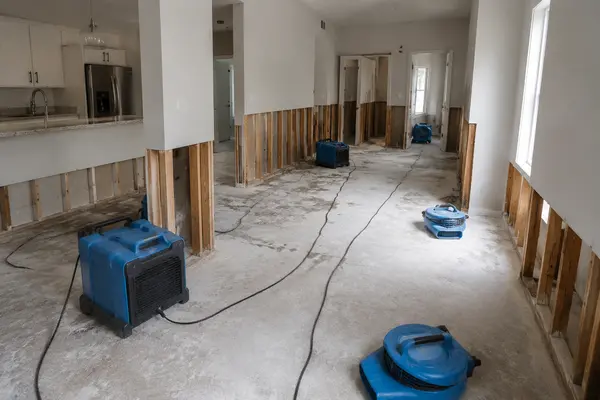
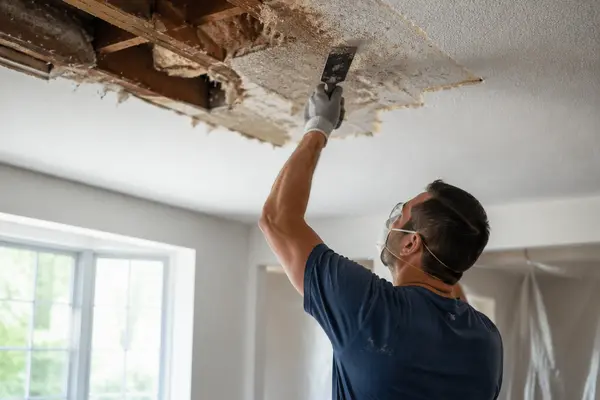
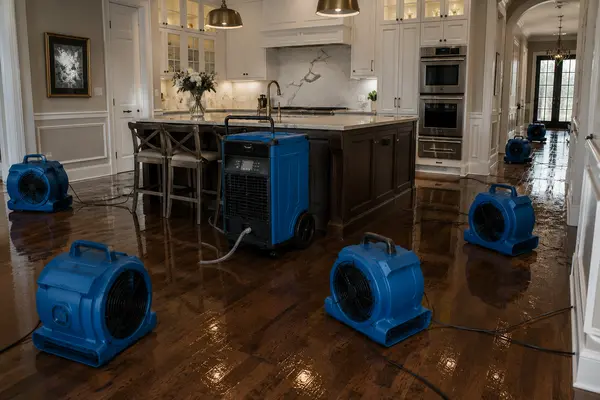
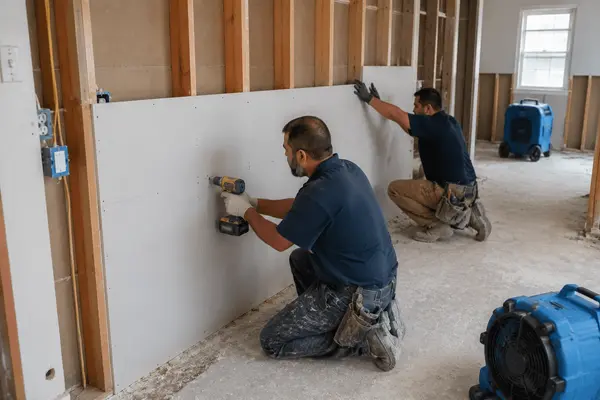
Most ceiling water damage work takes roughly three days to two weeks from assessment through paint, while a small dry patch can finish sooner and a continuing roof or pipe leak takes longer. The first day often involves moisture mapping, plastic containment, removal of saturated drywall, and air movers or dehumidifiers. Drying usually needs three to seven days because moisture must leave insulation and framing before new board seals the cavity.
Homeowners may hear fans and see cords, hoses, and a dehumidifier running; affected rooms can be partly unavailable, and dust barriers may narrow a hallway. The quiet-looking days are not idle: technicians take moisture readings in studs, drywall edges, and floor materials to confirm conditions are dry enough for reconstruction. Delays arise when readings stay elevated, replacement texture must cure between coats, or the leak source needs repair before the ceiling is closed.
NT WATER DAMAGE AUSTIN
9430 Research Blvd, Austin, TX 78759
(512) 900-6973
Hours of Operation
Open 24 Hours