
Waiting changes the building materials more than the air conditioner itself. A small drip pan overflow may leave the unit running, but water beneath carpet can spread into pad, baseboards, and drywall. NT Water Damage Austin can assess the affected area before wet carpet develops musty smells or bubbling paint. A stain on a ceiling may remain cosmetic for a short time; saturated padding and damp wall cavities do not, because they lose the option of simple surface drying. Learn more about our Austin nt water damage.
If the leak has stopped and a hard, nonporous tile floor is dry to the touch, arranging an inspection the next day is usually reasonable. The trade-off changes with carpet, engineered wood, or a ceiling below the air handler: trapped water can warp flooring, loosen paint, and create visible mould before the surface looks dramatic. Turning off the AC system or its affected zone, if safe, prevents fresh water from extending the wet area while cleanup is planned.
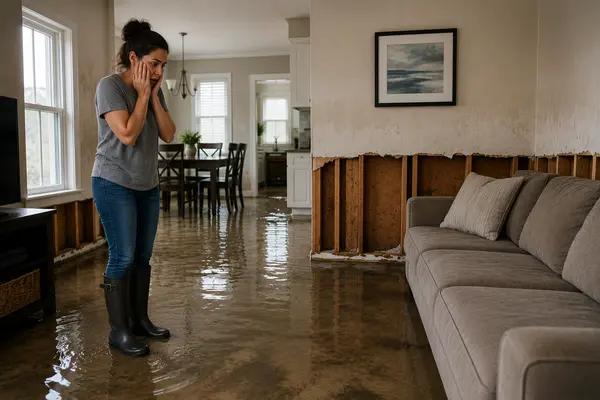
Following cleanup, carpet should feel dry through the backing rather than merely dry on top, and the room should lose its damp odour over several days. Slightly cooler air movement or a temporary dehumidifier reading is normal during final checks. Get back in touch if musty smells return, a brown stain widens, paint begins bubbling, or a floorboard lifts; those signs can indicate moisture beyond the original mapped area, not a new storm damage cleanup issue.
Keep the result holding by checking the condensate line, drain pan, and filter at regular service intervals, especially during Austin's humid cooling season. Clear airflow helps the evaporator coil drain as designed instead of producing excess condensate. Watch baseboards and closet walls for one to two weeks, since slow staining or a returning odour may emerge after furniture is moved. Avoid laying rugs over recently affected carpet until moisture readings have remained dry.
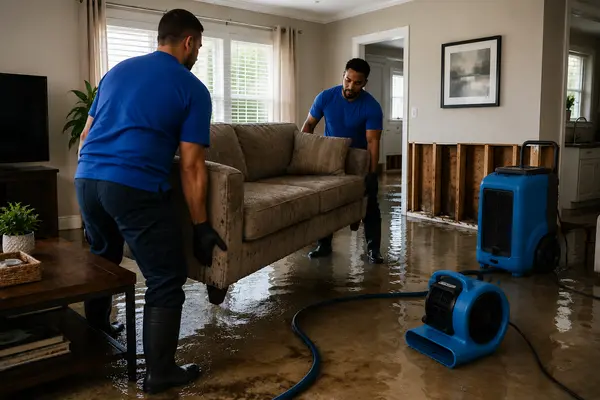
First, the technician identifies the source around the air handler, condensate drain, refrigerant line insulation, or ceiling penetration, then stops further water if possible. Moisture meters are used for moisture mapping across carpet, pad, drywall, and baseboards; this shows where water travelled beyond the visible puddle. Water extraction removes liquid from carpet and padding before equipment is installed. Removing that bulk water matters because evaporation alone can leave the pad damp for days. Learn more about our expert Structural Drying services.
Next, air movers direct airflow across wet materials while dehumidifiers pull water vapour from the room, allowing controlled drying rather than simply heating the space. Containment and HEPA filtration may be set up if damaged drywall or visible mould requires dust control. Antimicrobial treatment is applied where conditions warrant, followed by sanitising and monitoring with repeated meter readings. This structural drying process continues until affected materials reach an appropriate dry standard, often over two to five days.

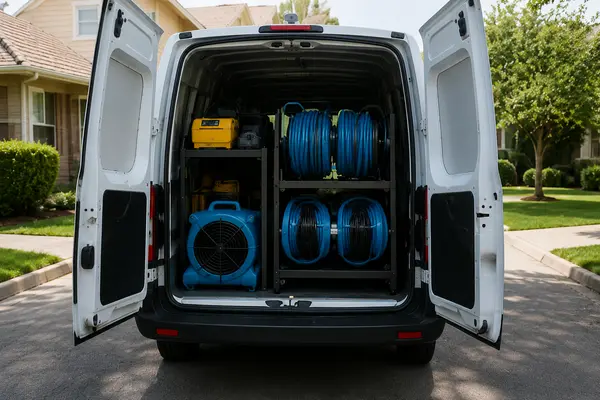
The scope depends on the leak's duration and path. A recently discovered condensate overflow on sealed tile may need extraction and a few readings, while water that passed through an attic ceiling can wet insulation, drywall, carpet, and framing on two levels. Previous attempts matter too: towels and fans can help a small surface spill, but they do not verify the moisture inside a wall or beneath vinyl flooring. Moisture mapping determines which materials can dry in place.
Timing also changes with access and material response. Furniture against a damp baseboard, glued-down carpet, swollen laminate planks, or a cabinet toe-kick can slow drying because airflow cannot reach the wet surface. If monitoring finds persistent high readings after 24 to 48 hours, removing a section of padding or drywall may be less disruptive than prolonging equipment use. The goal is to preserve dry, stable materials while addressing the components that cannot reasonably recover.
NT WATER DAMAGE AUSTIN
9430 Research Blvd, Austin, TX 78759
(512) 900-6973
Hours of Operation
Open 24 Hours